Facebook group auto posting is safe when you post only to groups you joined, use realistic delays between posts, vary copy, and use tools that work through your logged-in browser session rather than unofficial APIs. Accounts get restricted for duplicate bulk posts, bot-speed bursts, fake engagement, and tools that bypass normal Facebook login.
Every small business owner who discovers group posting asks the same question before they scale: “Will this get my Facebook account banned?”
The honest answer: posting to multiple groups can be safe or risky depending on how you do it. Facebook does not publish a “50 groups per day” allowance. They publish behavior signals. Match human patterns, respect communities, and most owners never see a serious restriction. Blast identical ads at machine speed, and you might lose group posting privileges for days or weeks.
This article explains what Facebook actually penalizes, which auto posting approaches carry more risk, and how to protect the account you use for business and personal life.
What Happens When Facebook Restricts a Group Posting Account?
Restrictions vary in severity.
Temporary posting limit. You see a message that you cannot post in groups for 24 hours to 30 days. Often triggered by spam reports or duplicate content.
Reduced distribution. Posts still go live but fewer members see them. Hard to diagnose; feels like “groups stopped working.”
Group join block. You cannot enter new groups for a period. Painful if you are building lists.
Account review or disable. Rare for typical local businesses, more common with repeated automation abuse, compromised accounts, or policy violations outside groups.
Restrictions usually come with an appeal option. Appeals sometimes work if you can show you posted manually and will change behavior. They rarely work if you used obvious bulk spam tools.
Prevention beats appeals. Your account is an asset worth guarding.
What Behaviors Trigger Facebook Spam Detection in Groups?
Facebook combines automated detection with member reports. Both matter.
Duplicate content at scale
Same text, same link, same image fingerprint across many groups in a short window. This is the number one issue we see when owners ask why a post vanished everywhere at once.
Fix: spintax, manual variants, different opening lines. See how to post to 50 Facebook groups without spam.
Unnatural posting speed
Fifteen group posts in four minutes does not match typical human clicking. Systems flag it whether you clicked or software clicked.
Fix: 2 to 5 minute delays minimum, longer if conservative. Split large lists across mornings.
Posting in groups you did not join
Some tools promise posting by group ID without membership. That violates platform norms and fails when groups require membership.
Fix: only post where you are a member and accepted by admins.
Ignoring engagement
Pure broadcast with zero comment replies looks extractive. Members report spam; moderators delete posts.
Fix: block 15 minutes after posting to answer early comments. One engaged post protects the next.
Link and redirect patterns
Same shortened URL across 40 posts triggers link spam classifiers. Some groups ban links entirely.
Fix: rotate link formats, use link-free versions, follow group-specific rules.
Fake accounts and bought groups
Using secondary profiles, purchased aged accounts, or joining groups solely to dump ads gets accounts killed fast.
Fix: use your real profile or official business presence with transparent identity.
Are All Auto Posting Tools Equally Risky?
No. The implementation matters more than the word “automation.”
| Method | Risk level | Why |
|---|---|---|
| Manual posting with delays you control | Lowest | Slow but clearly human |
| Chrome extension using your logged-in browser session | Low to moderate | Acts like you at keyboard if delays and variation are set |
| Desktop scripts clicking UI elements | Moderate | Can break when Facebook updates layout |
| Unofficial mobile API / emulator farms | High | Easy for platforms to detect non-standard clients |
| Cloud services holding your password posting 24/7 | High | Credential risk plus behavior patterns from datacenter IPs |
PostPartner is a Chrome extension that posts through your real browser session in groups you already joined, with delays and spintax. It does not replace your judgment on rules and copy. It replaces repetitive clicking. That model aligns with posting to multiple Facebook groups organically rather than blasting through a black-box API.
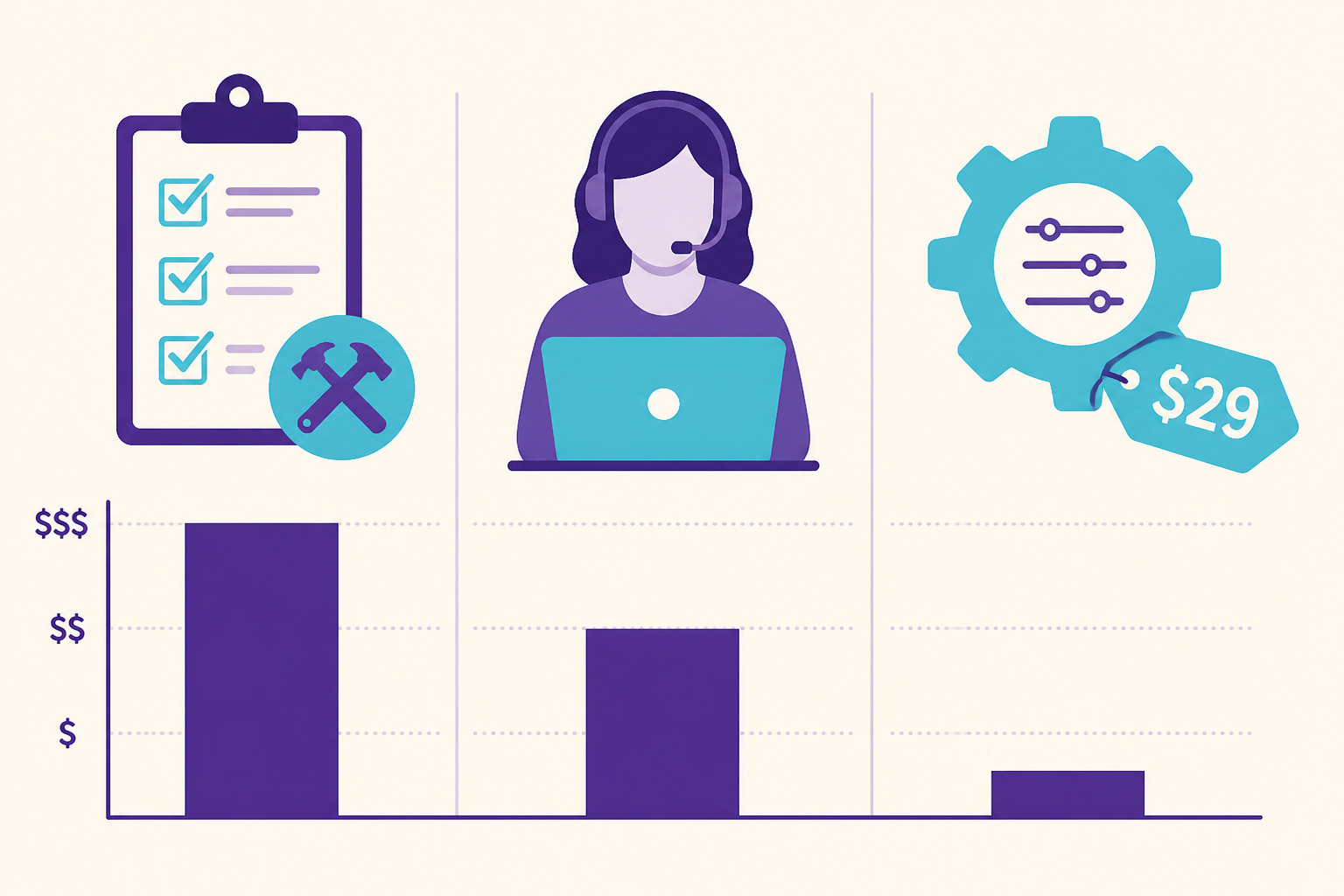
$29 per month, 1-day trial, 14-day refund on first payment if it is not right for you. Details at pricing.
Tools are not permission to spam. They are leverage for owners who already post responsibly.
How Does PostPartner’s Browser Session Approach Differ From Bulk Bots?
Understanding the difference helps you choose tools and set expectations.
Your session: You log into Facebook in Chrome. The extension queues posts and submits them the way a patient human would, with gaps between groups.
Your groups: You select from groups you joined. No secret backdoor into private communities.
Your copy: You write or spin variants. Optional AI drafts still need your edit before publish.
Your pace: You choose delay minutes and daily volume. Scaling from 10 to 40 groups over weeks is smarter than 40 on day one.
Contrast with a cloud bot that stores your password, logs in from a server in another state, and fires 100 posts while you sleep. Even if it “works” briefly, credential exposure and behavior mismatch create ban and security risk.
What Account History Makes Restrictions More Likely?
New Facebook accounts posting to 30 groups on week one raise flags. Accounts with prior spam warnings get shorter leashes.
Safer ramp for new group marketers:
Week 1: Join 5 to 10 groups, comment only, no promo.
Week 2: Post helpful non-promo content in 3 groups.
Week 3: Soft promo in 5 groups, 1 variant.
Week 4+: Scale toward your target list with delays and multiple variants.
Established business profiles with years of normal use can move faster, but still should not jump to 50 identical posts.
If you had a restriction before, wait the full period, reduce volume 50 percent when you return, and improve variation.
Do Group Moderators Ban You Even When Facebook Does Not?
Yes. Often.
Moderators delete posts for:
- Promo on wrong day
- Listings without disclosure
- Repeated weekly ads
- Low-effort copy paste obvious across groups
Member reports feed Facebook’s systems too. A deleted post is not a ban, but ten reports in a day can trigger account limits.
Read rules. Participate between promos. The weekly Facebook group posting schedule helps you look like a member, not a billboard.
Realtors face extra scrutiny. Follow the realtor Facebook group listing playbook for compliance-friendly formats.
What Should You Do If You Get a Posting Restriction?
Stop all automated and manual group posting immediately.
Screenshot the notice and note the date.
Read Facebook’s stated reason if provided.
Do not create a new profile to circumvent limits. That violates terms and compounds risk.
Wait out short limits fully before testing one manual post in one group.
When resuming, halve your group count, double your delays, triple your copy variants.
Appeal once with a calm explanation if you believe it was error. Do not appeal five times.
Review whether your tool or method was the trigger. Switch to browser-session posting with conservative settings if you were aggressive before.
How Does Auto Posting Safety Compare to Running Facebook Ads?
Ads use Facebook’s official paid pipeline. Group posting uses organic community rules. Different systems.
Ads can still get accounts disabled for policy violations on landing pages or creative. Groups add community moderation on top.
Many owners use both. Compare strategy in Facebook groups vs ads for small business. Safety on groups is about behavior mimicry and respect. Safety on ads is about policy compliance and payment history.
Neither channel rewards shortcuts long term.
Can RSS and AI Features Increase Spam Risk?
Automation layers add convenience, not immunity.
RSS to groups: New blog posts auto-flow to group lists. Safe when each RSS item becomes a varied post with delays, not 20 identical title dumps in ten minutes. Configure post from RSS feed to Facebook groups with sensible caps. Read RSS to Facebook groups for setup guardrails.
AI copy: Safe when you generate variants and fact-check before publish. Unsafe when you publish generic AI fluff identical across 40 groups. See write Facebook group posts with AI.
AI and RSS save time. They do not remove your responsibility for variation and volume limits.
What Checklist Should You Run Before Every Campaign?
Print this mentally before you queue 30 posts:
- Am I a member of every target group?
- Did I read each group’s promo rules this month?
- Do I have at least 3 copy variants?
- Are delays set to 2 minutes or more?
- Is today’s total group count under my ramp limit?
- Do I have 15 minutes blocked for comments after?
- Are links adjusted or removed for link-ban groups?
- Would I tolerate this post if a competitor posted it in my neighborhood group?
If any answer is no, fix before you launch.
Is Facebook Group Auto Posting Safe for Your Business?
Auto posting is safe enough for thousands of small businesses when you treat it like scaled manual posting: real account, real membership, varied copy, human delays, and engagement in comments.
It is unsafe when you chase volume without variation, use shady tools that hold your password or fake clients, or ignore community rules.
PostPartner exists for owners who need to post to 20 to 50 groups weekly without spending two hours clicking. It posts through your Chrome browser session with delays and spintax, plus optional AI and RSS. Try it with a 1-day trial; get a 14-day refund on your first payment if you do not like the workflow.
Pair the tool with the habits in this article and the cost of Facebook group posting math so you know the time you are saving is worth it.
Your account stays safest when neighbors see helpful, slightly different posts from a real local business, not the same ad stamped 50 times in an afternoon.
Post to your groups on autopilot
PostPartner posts through your Chrome extension to every group you belong to. Set up takes about 5 minutes.
Start 1-day trialKey takeaways
- 1
Duplicate text posted to many groups in minutes is the most common trigger for spam restrictions.
- 2
Tools that use your real Chrome browser session are generally safer than unofficial API bulk posters.
- 3
New accounts and accounts with prior warnings should post to fewer groups with longer delays.
- 4
Reading group rules and replying to comments reduces reports from members, not just algorithm flags.